

CHINK & DAUB FOR INFILL OF LOG WALLS Aug. 30 – Sep. 2, 2027
OVERVIEW
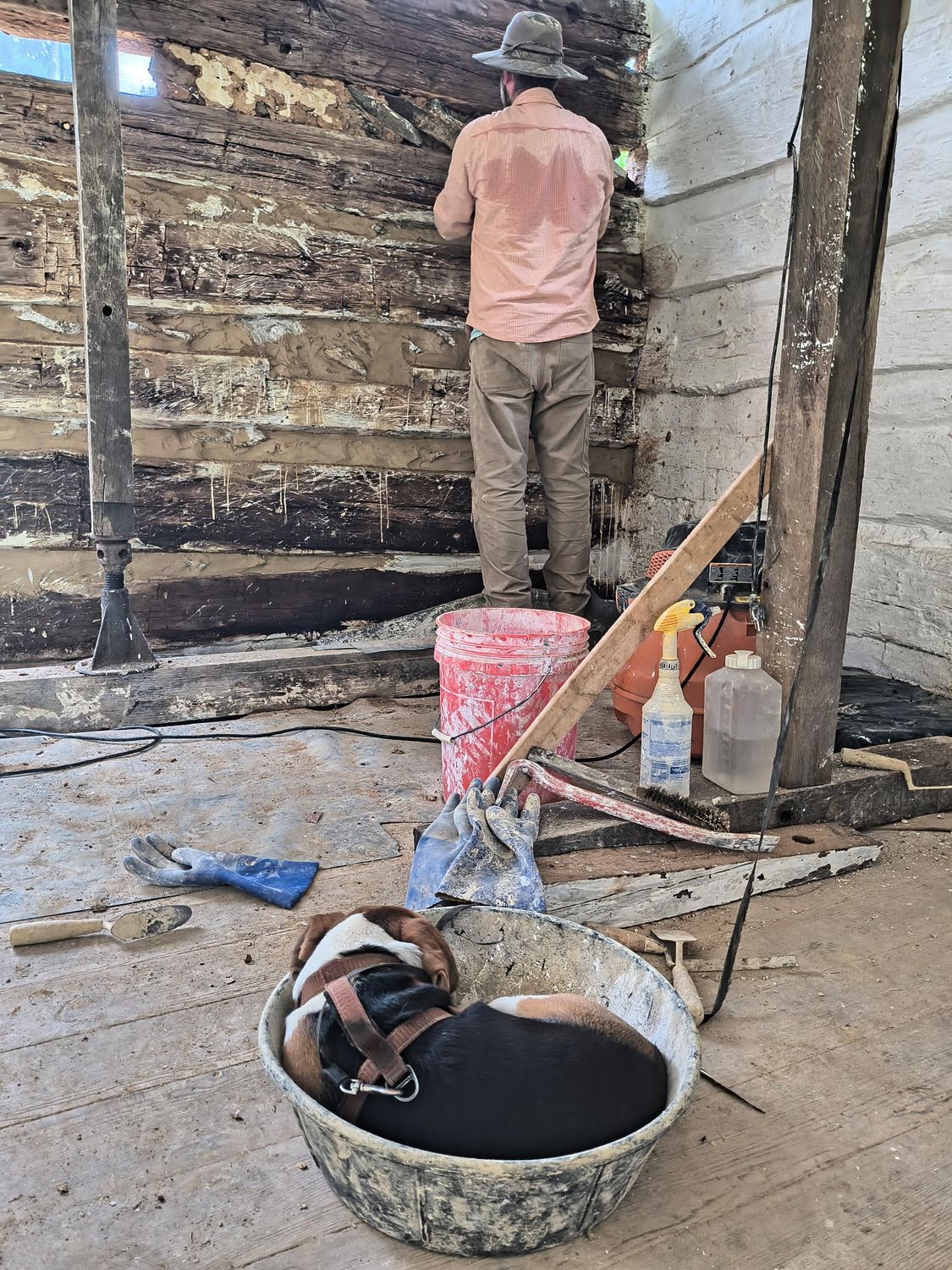
The focus of this 4-day course is to enclose the simplest of timber structures, the ‘cribbed’ log cabin, by infilling the gaps between horizontal log courses using traditional methods.
The Cribbed structure that we are referring to are the saddle- or dove- tailed notched Appalachian-style construction that was prevalent in Colonial times. Two-sided hewn logs, generally 6”- 8” thick, were stacked, leaving a gap between log courses of approximately ⅓ - ⅔ the width of the hewn face. Raising a cribbed wall brought the log builder to the roof line/plate sooner than the concurrent Scandinavian “scribed” or log on log method of log construction but it necessitated an infill method to keep the weather and pests out of structures that were intended for habitation.
Participants will learn:
- How to select chinking materials. Stone? Wood? Other?
- Setting ‘chinkers’ between logs.
- How and when to either repair or replace original chink & daub in historic structures.
- About the benefits of lime, sand and clay daubing in contact with wood.
- About pitfalls of modern Portland ‘cements’ when in contact with wood.
- About troweling tools and techniques to apply daubing.
- Harling daubing to pack out the infill.
- About the benefits of successive lime wash coats to preserve the daubing and wood.
- To differentiate between builder’s versus agricultural lime (proper versus improper lime sources).
- To source locally available, low cost chink & daub materials.
- How to mix earthen mortar (daubing) with binders.
SCHEDULE
Monday: 9:00 am - 5:00 pm
Tuesday through Thursday: 8:30 am - 4:30 pm
Lunch will be provided daily throughout the course.
INSTRUCTORS
Eric Westergard (visit our insturctors page to view instructor bios).
RECOMMENDED READING
The Foxfire Book (book #1 in the The Foxfire Series) by Eliot Wigginton